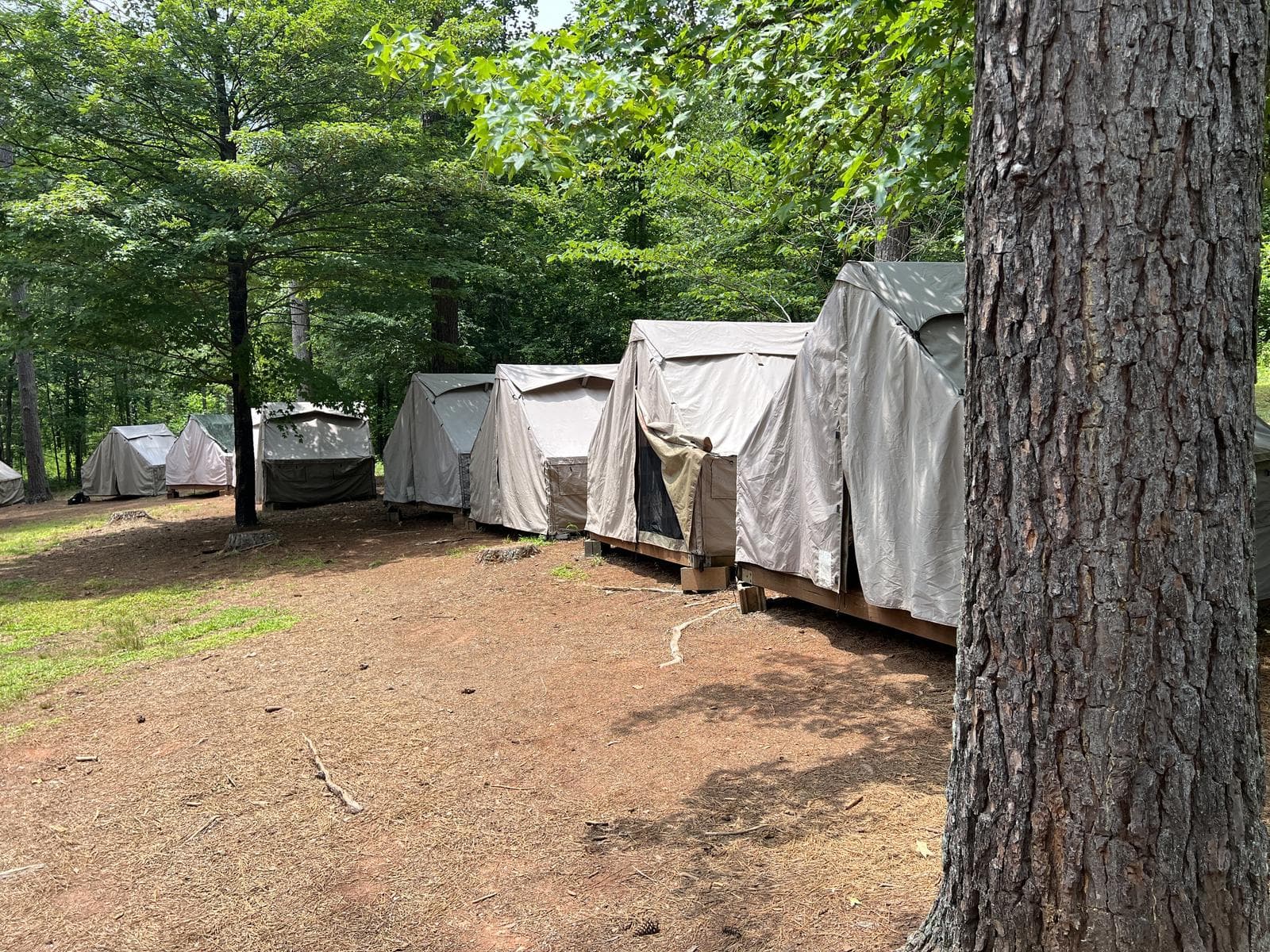
I'd been to Camp Durant, our council's camp, plenty of times before I became Scoutmaster — as a parent, tagging along, showing up when I was told to show up. So when it came time to plan my first campout there running the trip myself, I figured I already knew the place. What I actually knew was what it looked like from the passenger seat. Every bit of planning that made those earlier trips feel effortless had been happening somewhere I never had to look.
The trailer that couldn't come
For years, our troop trailer moved because a couple of families towed it. Then, within a matter of months, both of those families aged out and stepped away from Scouting at the same time — and I didn't own a truck yet. One of our adults offered to help with his truck, but he wasn't comfortable pulling the loaded trailer itself given the weight, so he hauled what fit in his truck bed instead. Whatever didn't fit stayed home. That included the fishing gear we'd built part of the weekend around.
A weekend built around whatever happened to be open
I'd visited Camp Durant enough times as a parent to assume the climbing tower, shooting sports, and waterfront were just there — show up, sign up, go. They're not. Those areas run on scheduled blocks, and getting into them usually means knowing ahead of time when they're open and reserving a spot. It's the kind of thing that's invisible when someone else is running the trip, and very visible the first time you're the one who has to know it.
So we got there and found out fishing was out (the gear was still sitting in the trailer at home) and the other areas weren't something we could just walk up to either. We scrambled, and ended up re-planning the whole weekend on the fly — building it around whatever rank requirements we could knock out with what was actually available, instead of the loose, fun outing I'd told the scouts to expect.
We'd planned a fun weekend. What we actually delivered was an improvised one, built out of whatever was still available once we got there.
Bland food with nowhere to fix it
The menu problem was smaller, but it landed right on top of everything else. I'd had the scouts plan the meals, but I never actually sat down and walked the list with them item by item — so the things that seem obvious to an adult, seasoning and condiments, never made it onto the list. Nobody noticed until food started coming off the camp stoves tasting like nothing. Normally that's an easy fix, a quick trading post run. Ours wasn't open that weekend. Bland was just what we had.
What actually changed
None of this was one clean lesson — it was three small planning gaps that all happened to hit the same weekend. Here's what's different now:
- Scouts plan the menu and go buy the food themselves, with a parent, instead of me picking it up alone. Walking the store forces the ingredient list to actually get checked line by line, and it's taught them what things cost and how to stay in budget for the kind of event they're doing.
- Before we book anything now, someone calls ahead or checks the camp's calendar to find out which program areas are actually open that weekend, and we plan the trip around that instead of assuming everything's walk-up.
- I bought a truck a few years into being Scoutmaster — not just for this — and for the last several years I've towed the trailer myself, so gear capacity isn't something we're improvising around whichever parent volunteers happen to still be around.
If you've been to your council camp a dozen times as a parent, that familiarity can be the trap — it feels like knowledge, but it's really just proof that someone else was doing the planning well enough that you never had to notice it. Running the trip is a different job than showing up to one. Know ahead of time what's actually open, walk the menu with your scouts instead of trusting the list they hand you, and figure out exactly what's hauling your gear before you're standing in the parking lot finding out.